
Las Vegas Truck & Commercial Vehicle Accident Lawyer
Hit by a Truck or Company Vehicle?
The Case May Be Bigger Than the Driver.
Hit by a Truck or Company Vehicle?
The Case May Be Bigger Than the Driver.
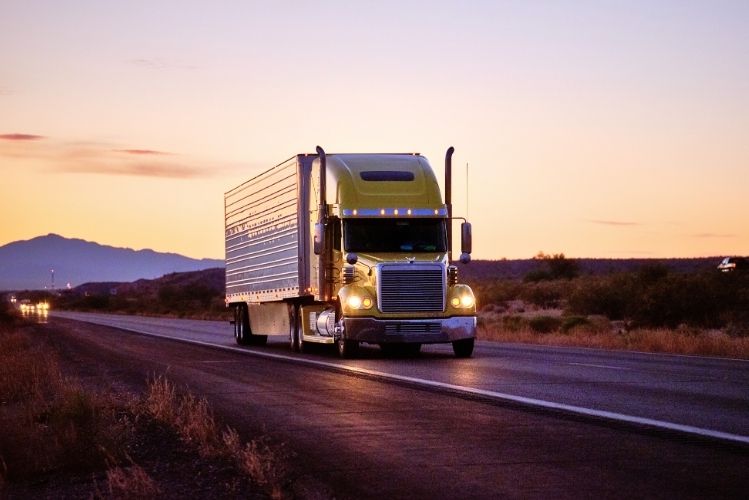
Commercial-vehicle crashes can be more complicated than ordinary car accidents.
The driver may be only one piece of the case.
Depending on what happened, responsibility may involve the trucking company, delivery company, vehicle owner, contractor, maintenance provider, insurer, or another business connected to the vehicle.
Ryan Alexander and his team investigate those relationships, identify available insurance, preserve evidence, and help injured people understand who may actually be responsible.
Why Commercial Vehicle Cases Are Different
When you are hit by a private driver, the investigation often begins with two vehicles and two insurance policies. A commercial crash can involve much more.
The vehicle may be:
owned by one company
leased by another
driven by an employee
operated by an independent contractor
maintained by a third party
carrying goods for another business
insured under commercial policies
subject to state or federal safety requirements
That means one of the first questions that needs to be asked is: “Who was responsible for putting that vehicle on the road?”
What Types of Commercial Vehicle Accidents Do We Handle?
Semi-Truck & 18-Wheeler Crashes
Large commercial trucks can cause catastrophic injuries because of their size, weight, and stopping distance.
Delivery Truck Accidents
Delivery vehicles from national carriers, contractors, and local companies operate throughout Las Vegas every day.
FedEx & UPS Accidents
These cases can involve company drivers, contractors, commercial policies, and questions about who controlled the vehicle.
Amazon Delivery Accidents
Deliveries may use different companies and contractors. It's important to identify the employer, vehicle owner, and insurance.
Box Trucks & Moving Trucks
Rental, moving, and commercial box trucks may be operated by businesses or individual drivers under different insurance arrangements.
Work Vans & Company Vehicles
A crash involving a company-owned van, pickup, or service vehicle may raise questions about whether the driver was acting within the scope of employment.
Construction & Utility Vehicles
Heavy work vehicles can create serious hazards when operated improperly or maintained poorly.
Bus & Passenger Carrier Accidents
Commercial passenger carriers may be subject to different insurance and regulatory requirements than ordinary motorists.
Who May Be Responsible for a Truck Accident?
Depending on the evidence, responsible parties may include:
The Driver
A driver may cause or contribute to a crash through speeding, distraction, fatigue, impairment, unsafe lane changes, or other negligent conduct.
The Employer
An employer may potentially bear responsibility for conduct occurring within the scope of employment or for its own negligence in hiring, supervision, training, or policies.
The Trucking or Delivery Company
The company operating the commercial vehicle may be responsible for maintenance, scheduling, safety procedures, or compliance with applicable regulations.
The Vehicle Owner
The company that owns or leases the vehicle may be different from the business whose name appears on it.
A Maintenance Provider
Brake failures, tire problems, steering issues, or other mechanical defects may raise questions about maintenance and inspection.
A Loading Company
Improperly loaded or secured cargo can affect vehicle stability and stopping distance.
A Manufacturer
A defective vehicle or component may potentially create a separate product-liability issue.
What If the Truck Driver Says the Crash Was Your Fault?
That does not end the analysis.
Nevada uses comparative negligence.
Under NRS 41.141, an injured person may still recover when their own negligence is not greater than the negligence of the defendant or combined defendants. (Nevada Legislature)
That means fault can be divided.
In a commercial case, liability may also be shared among multiple defendants depending on the evidence.
What Compensation May Be Available?
Depending on the circumstances, a commercial-vehicle injury claim may involve compensation related to:

Medical Expenses
Treatment connected to injuries caused or aggravated by the crash.

Future Medical Care
Serious injuries may require rehabilitation, surgery, therapy, or long-term treatment.

Lost Income
Time away from work can create immediate financial losses.

Loss of Future Earning Capacity
Permanent injuries may affect someone’s ability to work or earn income in the future.

Pain and Suffering
The physical and non-economic impact of serious injuries may become part of the claim.

Property Damage
Damage to a vehicle and other personal property may also need to be addressed.
Other Losses: The recoverable damages depend on the individual facts of the case.
How Much Is a Truck Accident Case Worth?
There is no fixed value.
Commercial-vehicle cases can sometimes involve higher insurance limits than ordinary car crashes, but coverage alone does not determine case value.
Important factors can include:
severity of injuries
medical treatment
permanent impairment
lost income
future care
available insurance
number of responsible parties
strength of the liability evidence
company conduct
comparative fault
long-term impact on the injured person
Commercial Insurance Can Be Very Different From Personal Auto Insurance
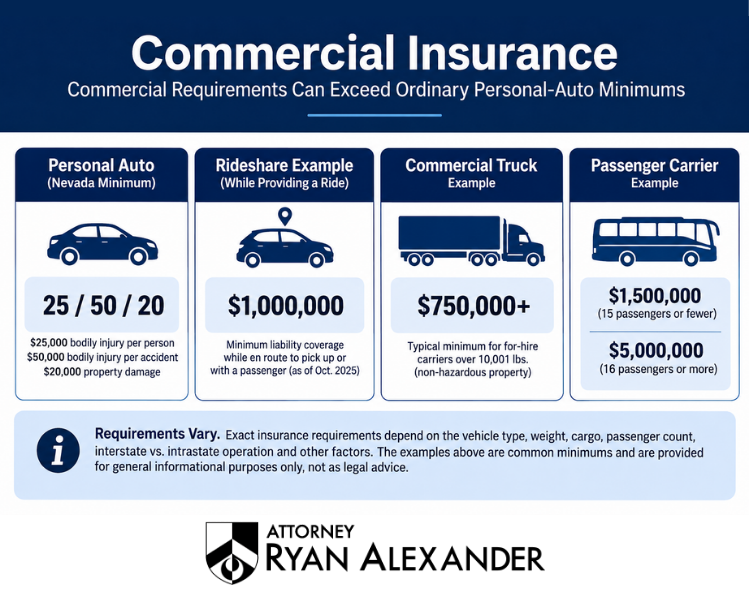
One of the most important differences in some truck cases is the potential insurance coverage.
Federal financial-responsibility requirements vary depending on the type of carrier, vehicle, and cargo.
For example, FMCSA currently lists minimum bodily-injury/property-damage financial responsibility of:
$300,000 for certain for-hire, non-hazardous property carriers under 10,001 pounds
$750,000 for certain for-hire, non-hazardous property carriers at or above 10,001 pounds
$1 million for certain hazardous-material carriers
$5 million for carriers of certain highly hazardous materials
Passenger-carrier requirements can also be substantially higher. (FMCSA) That does not mean every commercial vehicle automatically has a large policy.
Insurance requirements depend on the vehicle, carrier, operating authority, cargo, and other facts. (FMCSA) The actual policies need to be identified and reviewed.
Frequently Asked Questions
Is a delivery-truck accident different from a normal car accident?
Potentially. Commercial ownership, employment relationships, company policies, and commercial insurance can add additional layers to the case.
Can I sue the company as well as the driver?
Possibly. Whether a company may be responsible depends on the relationship between the driver and company and the facts surrounding the crash.
Do truck drivers have higher insurance limits?
Some federally regulated motor carriers are subject to higher financial-responsibility requirements, but the applicable minimum depends on the carrier, vehicle, cargo, and operating authority. (FMCSA)
What if the truck was leased?
Ownership and control still need to be investigated. A leased vehicle may involve separate owners, operators, carriers, and insurance policies.
What if an Amazon, UPS, or FedEx vehicle hit me?
The first step is determining exactly who employed the driver, who owned the vehicle, what company operated it, and which insurance policies apply.
What if the truck driver was an independent contractor?
The label alone does not resolve every liability question. The actual relationship, control, agreements, and facts surrounding the work may matter.
What if I was partly at fault?
Nevada comparative-negligence law may still allow recovery if your negligence was not greater than the negligence of the party or combined parties you seek recovery from.
Do I have two years to file?
Nevada generally applies a two-year limitations period to many personal-injury actions, but different parties or claims may involve additional requirements. (Nevada Legislature)
Get In Touch
Email: [email protected]
Office Hours
Mon – Fri: 8:00am – 5:00pm
Sat – Sun: CLOSED
Attorney Ryan Alexander
3017 West Charleston Blvd, Ste 10
Las Vegas, Nevada 89102
Phone Number: (702) 333-8888

Located on W. Charleston Blvd. in Las Vegas, near Rancho Dr.


© 2026 | Attorney Ryan Alexander - All Rights Reserved