
Las Vegas Car Accident Lawyer
Hurt in a Crash?
You Don’t Have to Deal With the Insurance Company Alone.
Hurt in a Crash?
You Don’t Have to Deal With the Insurance Company Alone.
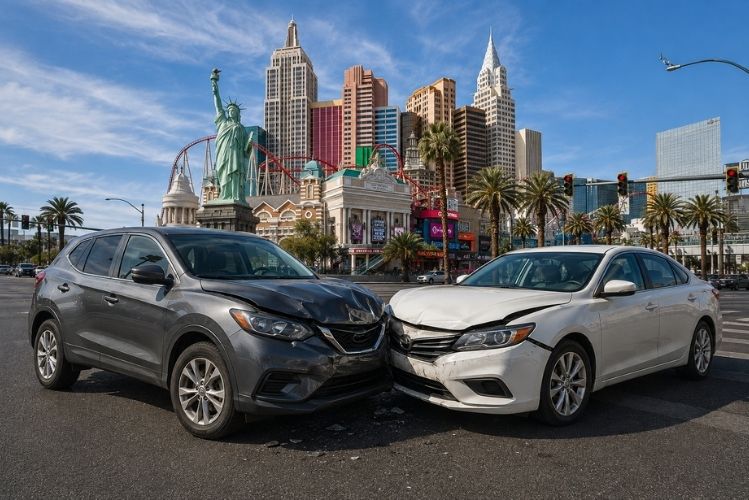
A car accident can change your day in seconds and your life for much longer.
Medical appointments. A damaged vehicle. Missed work. Insurance adjusters calling for statements. Questions about who was at fault and what your case may actually be worth.
Ryan Alexander and his team help injured drivers and passengers throughout Las Vegas understand their options, investigate what happened, and pursue the compensation available under Nevada law.
Why Car Accident Claims Get Complicated Fast
Most people involved in a serious crash have never dealt with a personal injury claim before.
Insurance companies have.
Adjusters investigate accidents every day. They collect statements, review medical records, evaluate liability, and determine what the company is willing to pay.
That does not automatically make the insurance company your enemy. But it does mean that the insurer enters the process with considerably more experience than the average injured person.
Ryan’s role is to help level that playing field.
His team can communicate with insurers, gather evidence, evaluate available coverage, document damages, and help clients understand what decisions may affect their claim.
What Should You Do After a Car Accident in Las Vegas?
What you do after a crash can affect both your health and your ability to document what happened.
1. Get to Safety
If possible, move out of immediate danger and call emergency services when necessary.
2. Report the Accident
Depending on the circumstances, law enforcement may respond and document the collision.
3. Photograph What You Can
If it is safe to do so, photograph:
- vehicle damage
- the roadway
- traffic signals and signs
- skid marks or debris
- visible injuries
- license plates
- insurance information
4. Get Witness Information
Independent witnesses may become important if the drivers disagree about what happened.
5. Seek Appropriate Medical Care
Some injuries are obvious immediately. Others may become more noticeable later.
If you are experiencing symptoms, seek appropriate medical attention and accurately explain how the injury occurred.
6. Be Careful With Insurance Statements
Report accurate information, but do not guess about fault, injuries, or details you do not know.
7. Preserve Everything
Keep:
- photographs
- videos
- medical records
- insurance correspondence
- repair estimates
- receipts
- wage-loss information
The sooner important evidence is preserved, the easier it may be to understand what actually happened.
What Types of Car Accidents Do We Handle?
Rear-End Collisions
Rear-end crashes are common, but liability and injury issues can still be disputed.
Intersection Crashes
These cases may involve traffic lights, stop signs, turning vehicles, surveillance footage, and conflicting accounts.
T-Bone Collisions
Side-impact crashes can cause serious injuries because passengers may have less physical protection from the point of impact.
Head-On Collisions
Head-on crashes often involve significant forces and potentially severe injuries.
Highway Accidents
High-speed collisions on I-15, US-95, I-215, and other Las Vegas-area roadways can involve several vehicles and complicated accident scenes.
Multi-Vehicle
When several drivers contribute to a crash, determining responsibility can require a much deeper investigation.
Hit-and-Run
Even when the other driver leaves the scene, there may still be insurance and recovery options worth investigating.
Uninsured Driver
If the at-fault driver has no insurance (or not enough) your own UM/UIM coverage may still provide a path to recovery.
Who May Be Responsible for a Car Accident?
Sometimes the answer is obvious.
Sometimes it is not.
Potentially responsible parties can include:
another driver
multiple drivers
a vehicle owner
an employer
a commercial company
a rideshare company
a manufacturer
another person or entity whose conduct contributed to the collision
Responsibility is determined by the facts and evidence, not simply by who speaks first or who sounds most confident.
What If You Were Partially at Fault?
You may still be able to recover compensation.
Nevada uses comparative negligence.
Under NRS 41.141, an injured plaintiff is not automatically barred from recovery when partly responsible, so long as the plaintiff’s negligence is not greater than the negligence of the defendant or combined defendants. A plaintiff’s percentage of fault can reduce the amount recoverable. (Nevada Legislative Counsel Bureau)
That means a crash does not always need to be:
100% their fault / 0% your fault.
Fault can be shared.
What Compensation May Be Available After a Car Accident?
Every case is different.
Depending on the injuries, evidence, available insurance, and other circumstances, damages may potentially include compensation relating to:

Medical Expenses
Including treatment reasonably related to accident injuries.

Future Medical Care
Injuries may require treatment, rehabilitation, or procedures.

Lost Income
Time away from work may create financial losses.

Loss of Future Earning Capacity
A long-term injury may affect a person’s ability to perform their previous job or earn income.

Pain and Suffering
Physical pain, limitations, and other non-economic effects may become part of an injury claim.

Property Damage
Vehicle repairs or total-loss issues are often handled alongside the injury claim.
Other Losses: The recoverable damages depend on the individual facts of the case.
How Much Is a Las Vegas Car Accident Case Worth?
There is no universal settlement amount.
The value of a car accident case can depend on factors such as:
the nature and severity of the injuries
medical treatment
whether injuries are permanent
lost income
future care
fault
available insurance
prior medical conditions
consistency of medical records
witness credibility
strength of the evidence
whether litigation becomes necessary
How Much Insurance Is Available?
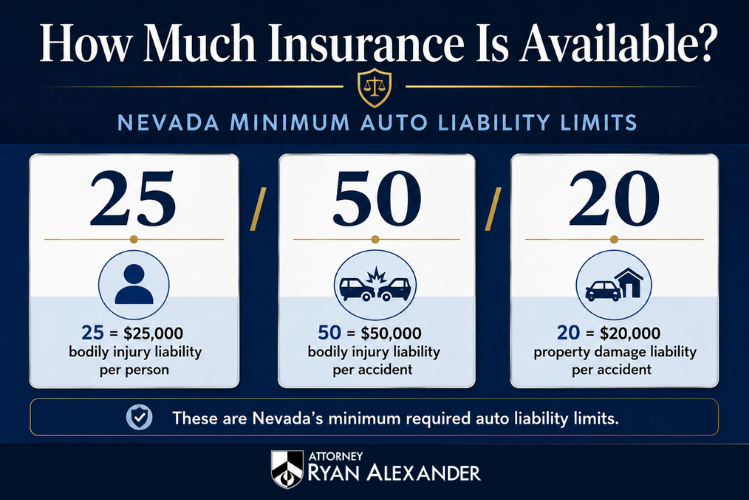
Nevada currently requires minimum liability coverage of:
$25,000 for bodily injury to one person
$50,000 for bodily injury to two or more people in one crash
$20,000 for property damage
These are commonly described as 25/50/20 limits. But minimum coverage is not necessarily the only insurance that may exist.
Depending on the accident, additional sources might include:
higher liability limits
umbrella coverage
employer/commercial insurance
uninsured motorist coverage
underinsured motorist coverage
rideshare coverage
other applicable policies
Identifying available insurance can be one of the most important early parts of a serious injury investigation.
Frequently Asked Questions
Do I have a car accident case?
Possibly. Whether you have a viable claim depends on fault, injuries, evidence, damages, insurance coverage, and other facts.
Do I need a lawyer for a minor accident?
Not every accident requires an attorney. But when injuries, disputed fault, insurance issues, or significant damages are involved, getting an evaluation can help you understand your options.
What if I already talked to the insurance company?
That does not automatically mean you lost your claim. Preserve any correspondence and explain exactly what was discussed.
What if the accident was partly my fault?
Nevada comparative-negligence law may still permit recovery when your negligence is not greater than the negligence of the party or parties you are seeking recovery from. (Nevada Legislative Counsel Bureau)
How much does a car accident lawyer cost?
Personal injury cases are often handled on a contingency-fee basis. The exact percentage, responsibility for costs, and terms should be clearly disclosed in the written fee agreement before representation begins.
How long will my case take?
It depends. Injury severity, treatment, liability disputes, insurance coverage, negotiation, and litigation can all affect the timeline.
Do I have to go to court?
Not necessarily. Many cases settle without trial, but litigation may become necessary if the parties cannot reach an appropriate resolution.
What if the other driver has only minimum insurance?
Additional insurance sources may exist depending on the circumstances, including UM/UIM coverage, commercial coverage, employer policies, or other applicable insurance.
Get In Touch
Email: [email protected]
Office Hours
Mon – Fri: 8:00am – 5:00pm
Sat – Sun: CLOSED
Attorney Ryan Alexander
3017 West Charleston Blvd, Ste 10
Las Vegas, Nevada 89102
Phone Number: (702) 333-8888

Located on W. Charleston Blvd. in Las Vegas, near Rancho Dr.


© 2026 | Attorney Ryan Alexander - All Rights Reserved