
Las Vegas Product Liability Lawyer
Injured by a Dangerous Product?
The Problem May Go Back Long Before You Used It.
Injured by a Dangerous Product?
The Problem May Go Back Long Before You Used It.
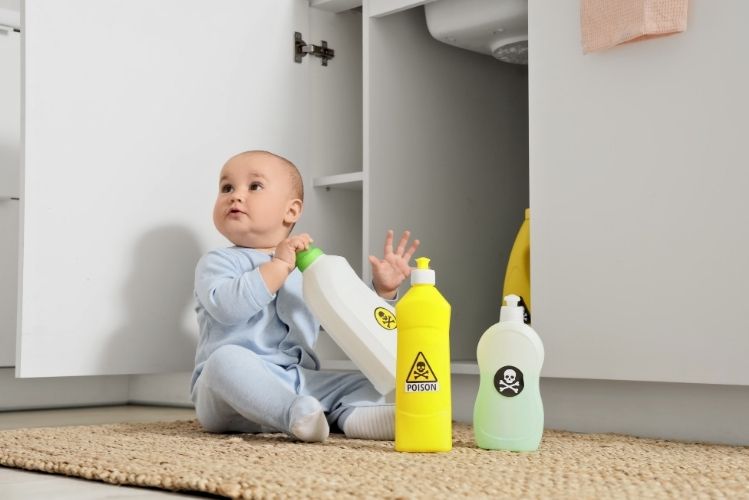
Products are supposed to perform reasonably safely when used as intended or in reasonably foreseeable ways. Sometimes they do not.
A component fails. A machine behaves unexpectedly. A battery catches fire. A safety mechanism does not work. Instructions leave out an important danger. A product reaches consumers with a defect that should never have been there.
When that happens, the investigation may extend far beyond the store where the product was purchased.
Ryan Alexander and his team help people injured by potentially defective products investigate what failed, why it failed, and which companies may bear responsibility.
What Types of Defective Products Can Cause Injuries?
Vehicles and Automotive Components
Potential issues can involve:
- tires
- brakes
- steering systems
- airbags
- seat belts
- roofs
- fuel systems
- vehicle electronics
- other safety components
Batteries and Electronics
Lithium-ion batteries and other electronic products can potentially present fire, explosion, overheating, or electrical hazards when something goes wrong.
Nevada courts continue to address product-liability issues involving modern battery technology. In a 2025 case, the Nevada Supreme Court considered claims arising from a lithium-ion battery that allegedly exploded and caused severe burns.
Power Tools and Equipment
Saw guards, nail guns, drills, machinery, and other tools can cause serious injuries when safety components, warnings, or product design are disputed.
Appliances
Potential claims may involve fires, electrical shocks, burns, explosions, or mechanical failures.
Children's Products
Cribs, toys, car seats, furniture, and other children's products can create significant safety concerns when defective.
Medical and Health Products
Some injury claims involve medical devices, equipment, or other health-related products, although specialized federal and state rules may apply.
Industrial Equipment
Workplace machinery, lifts, presses, construction equipment, and other industrial products may require technical investigation and expert analysis.
Household Products
Furniture, ladders, exercise equipment, tools, containers, and everyday consumer goods can also become the subject of product-liability claims.
A Product Does Not Have to Be Completely Broken to Be Defective
Some defective products still appear to function. The issue may only arise under a particular condition.
For example:
a safety mechanism fails during an emergency
a component breaks under an expected load
a battery overheats during ordinary use
a vehicle roof does not protect occupants as expected
instructions fail to disclose a serious risk
a guard does not prevent contact with moving machinery
The investigation therefore should not stop at:
“Was the product working before the accident?”
The more important question may be:
“Did it perform as an ordinary user could reasonably expect when it mattered?”
That principle is central to Nevada's consumer-expectation approach to design defects.
What If You Did Not Buy the Product?
The injured person does not necessarily have to be the original purchaser.
A defective product may injure:
a passenger
a family member
an employee
a customer
a bystander
another person using the product
Nevada's strict-products-liability doctrine historically focuses on injuries caused by defective products rather than requiring a traditional contractual relationship between the injured person and manufacturer.
Frequently Asked Questions
What makes a product defective in Nevada?
Depending on the claim, a defect may involve design, manufacturing, or inadequate warnings. Nevada uses the consumer-expectation test in strict-liability design-defect cases. (Justia Law)
Do I have to prove the manufacturer was negligent?
Not necessarily for a strict-products-liability theory. Nevada has long recognized strict liability for injuries caused by defective and unreasonably dangerous products, although the required elements still must be proven.
Do I need to prove there was a safer alternative design?
Nevada's Supreme Court declined to make proof of a reasonable alternative design a required element of a strict-liability design-defect claim under its consumer-expectation test.
Can inadequate warnings make a product defective?
Yes. Nevada recognizes failure-to-warn theories where foreseeable dangers were not adequately communicated.
Should I return the product to the manufacturer?
Do not casually surrender potentially important evidence. Preserve the product and consider obtaining legal guidance before allowing it to be altered, repaired, or destroyed.
Does there need to be a recall?
No. A recall can be relevant evidence, but it is not a prerequisite to every product-liability case.
Can I sue the company whose name appears on the product?
Possibly, but branding alone does not determine responsibility. In 2025, the Nevada Supreme Court held that a trademark licensor whose only involvement was licensing its name was not strictly liable on that basis alone.
How much is my defective-product case worth?
There is no standard amount. Injury severity, permanent effects, defect evidence, causation, responsible companies, insurance, lost income, expert evidence, and other factors can all affect the case.
Get In Touch
Email: [email protected]
Office Hours
Mon – Fri: 8:00am – 5:00pm
Sat – Sun: CLOSED
Attorney Ryan Alexander
3017 West Charleston Blvd, Ste 10
Las Vegas, Nevada 89102
Phone Number: (702) 333-8888

Located on W. Charleston Blvd. in Las Vegas, near Rancho Dr.


© 2026 | Attorney Ryan Alexander - All Rights Reserved